
 RFQ ()
 Sitemap
 Search
Quick Answer: A piston distributor does not simply divide flow. It meters a defined quantity at each outlet. The system must reach the distributor's specified actuating pressure and then relieve the main-line pressure sufficiently so the piston can reset or recharge for the next cycle.
A volumetric lubrication system is a centralized lubrication system that supplies a predetermined volume of lubricant to each lubrication point during every completed cycle. Its key metering components - commonly called volumetric distributors, piston distributors, or positive displacement injectors (PDIs) - use piston displacement to produce repeatable output. When correctly matched to the lubricator, lubricant, pressure range, and relief cycle, this design helps CNC machine tools and industrial equipment avoid both insufficient lubrication and excessive lubricant consumption.
Why Lubricant Quantity Matters
In a centralized lubrication system, confirming that oil or grease has entered the main line is not the same as confirming that every lubrication point has received the required amount. Guideways, ball screws, bearings, chains, and other moving components can have different lubricant requirements. Pipe length, outlet resistance, component back pressure, lubricant viscosity, and operating temperature may also influence system behavior.
A properly designed volumetric system assigns a specified output to each point. This makes lubricant delivery easier to calculate and repeat than in a system that relies only on flow resistance.
| Condition | Typical effect | Possible machine consequence |
|---|---|---|
| Insufficient lubrication | The lubricant film becomes too thin to separate moving surfaces reliably. | Higher friction, localized heat, accelerated wear, loss of positioning accuracy, or premature component failure. |
| Over-lubrication | Excess lubricant can increase churning, leakage, contamination, or residue buildup. | Seal damage, higher lubricant consumption, housekeeping problems, or increased operating resistance in some components. |
What Is a Volumetric Distributor or Piston Distributor?
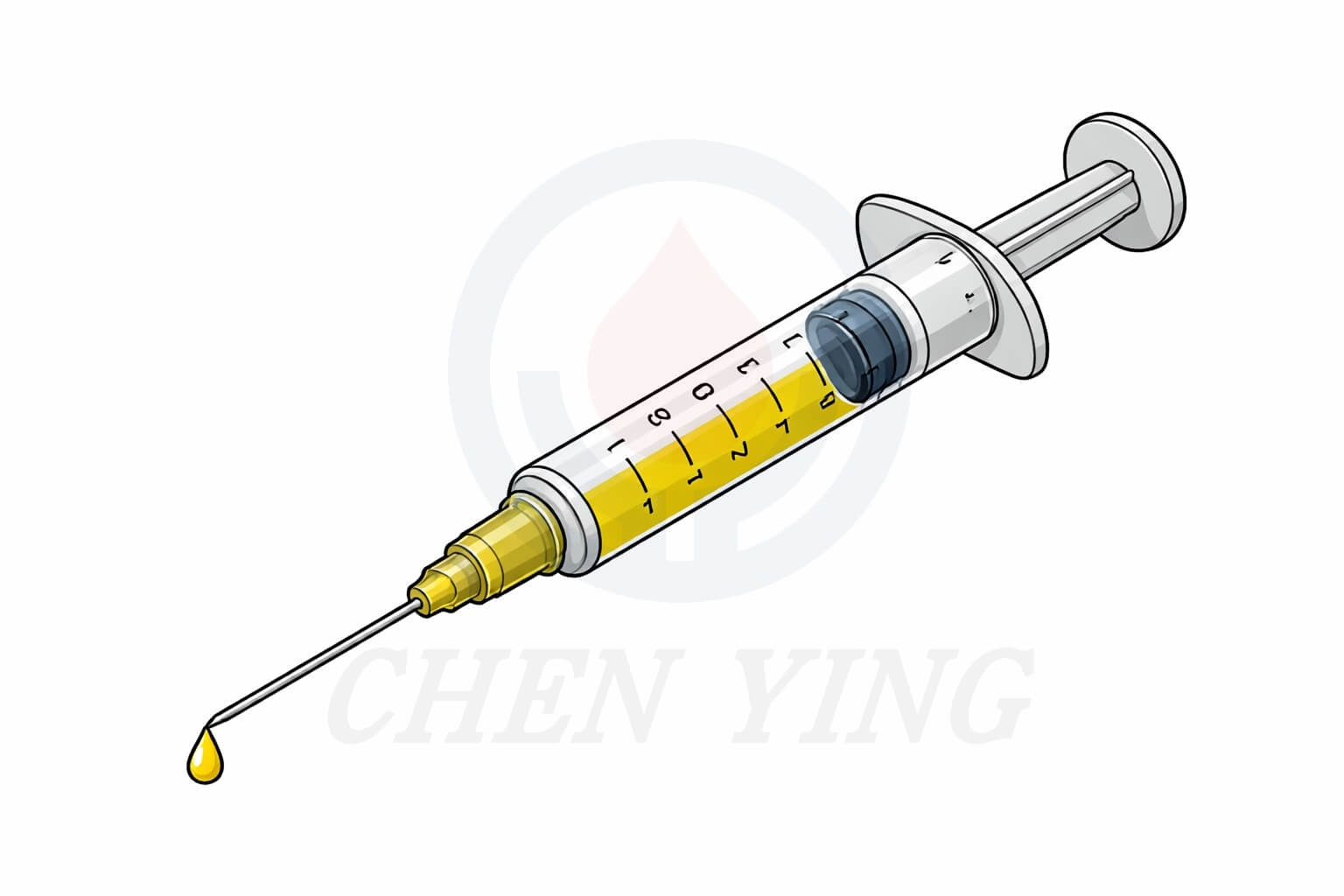 Volumetric Lubrication System with Piston Distributor for Precise Lubricant Delivery
A volumetric distributor is a lubricant metering device with one or more piston chambers. Each chamber is designed for a specified discharge volume. During a complete lubrication cycle, piston movement displaces the measured lubricant toward the connected lubrication point.
In international lubrication terminology, similar devices may be described as piston distributors, positive displacement injectors, positive displacement distributors, volumetric injectors, or single-line metering devices. PDI normally means positive displacement injector or positive displacement injection system. Because operating sequences and pressure requirements vary by manufacturer and series, component compatibility must be verified from the applicable technical data rather than from the name alone.
How a Volumetric Lubrication System Works
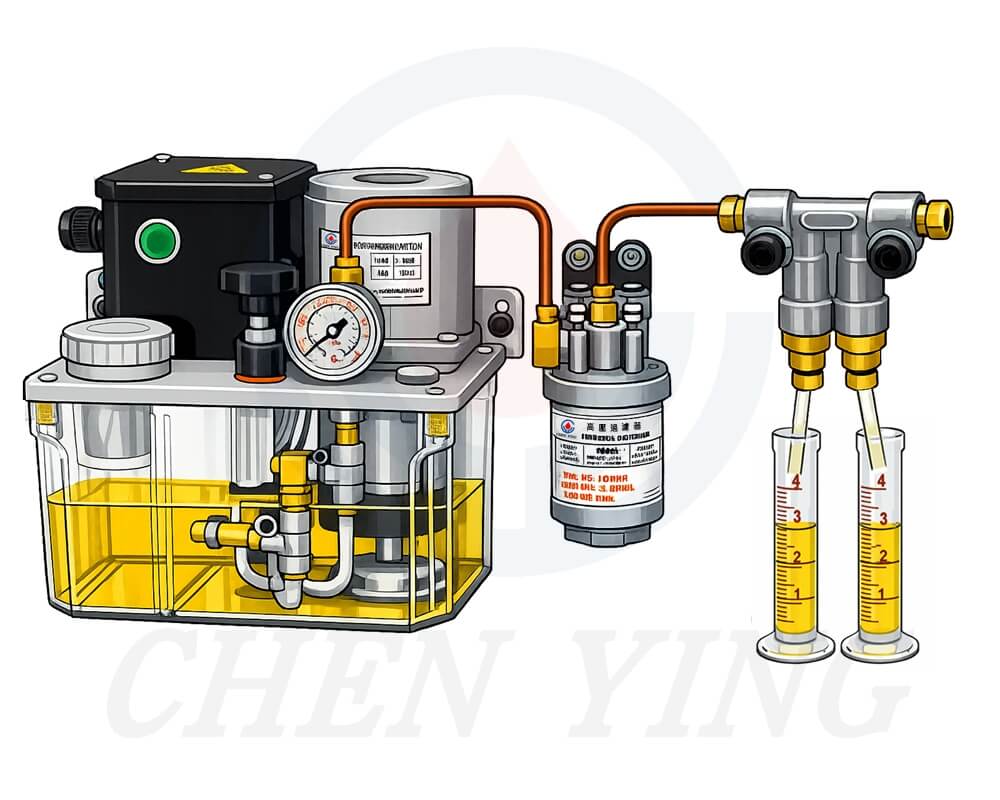 Pressure-Relief Type Oil Electric Lubricator with Volumetric Distributor
- The lubricator sends oil or grease into the main supply line.
- System pressure rises to the operating range required by the selected distributor.
- Pressure moves the internal piston and meters or discharges the specified lubricant volume, depending on the distributor design.
- The lubricator stops and its pressure-relief mechanism vents the main line.
- The piston returns or the metering chamber recharges, preparing the distributor for the next lubrication cycle.
System requirement: A complete pressure-and-relief sequence is essential. If the system does not reach the required actuating pressure, an outlet may not complete its stroke. If residual pressure remains too high, the piston may not reset or recharge correctly.
Two Discharge Sequences Used by Chen Ying
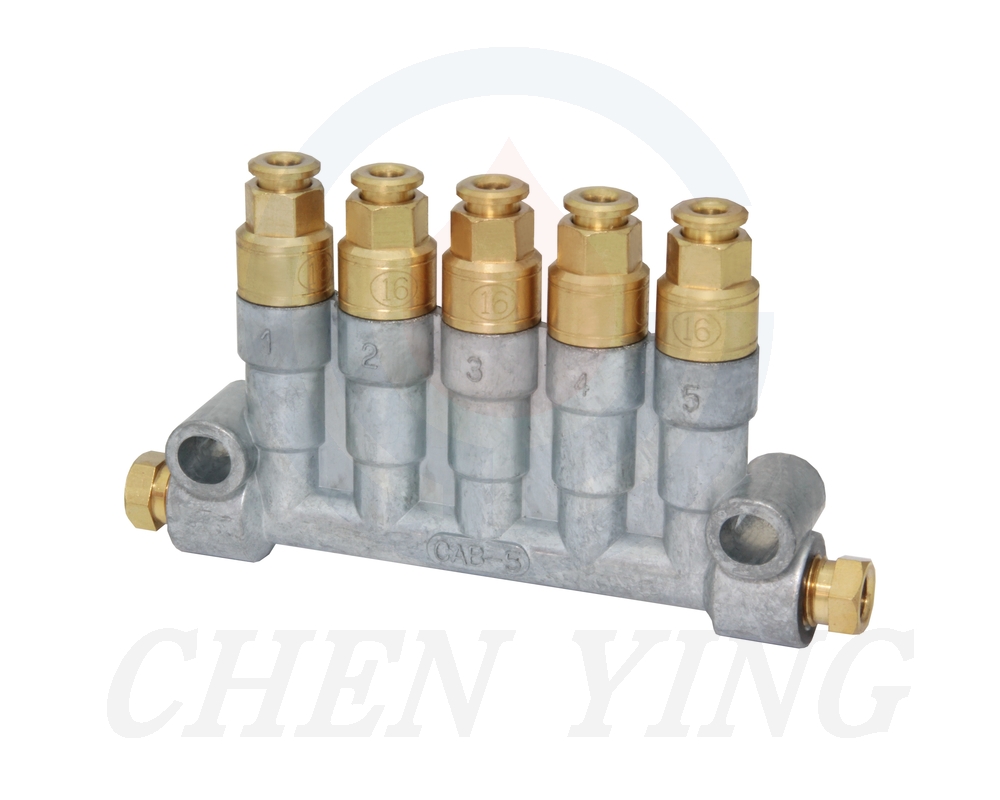 CAB-5 Volumetric Distributor
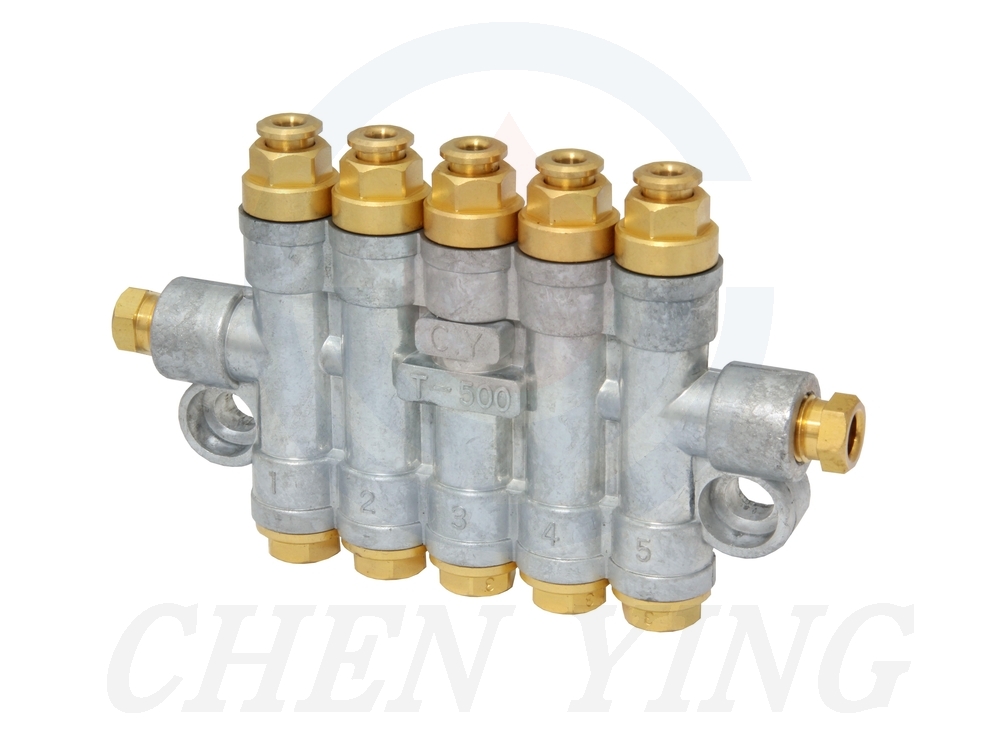 T-500 Volumetric Distributor
| Type | Pressure-discharge type | Pressure-relief discharge type |
|---|---|---|
| Discharge timing | During lubricator operation | After the lubricator stops and pressure is relieved |
| How it works | Rising main-line pressure drives the piston and sends the metered volume to the lubrication point. | During pressurization, lubricant is metered or stored in the chamber. Spring return delivers the measured volume after pressure relief. |
| Chen Ying examples | CAB, CBB, CCB, CO / OA, OC, CFB | T, CDB |
| Actuation Example |
|
|
Both types require a compatible pressure-relief lubricator and sufficient interval time for pressure relief and piston reset. Always confirm operating pressure, relief pressure, lubricant range, cycle timing, tubing, and outlet configuration for the selected model.
Which Chen Ying Pressure-Relief Oil Lubricator Should You Choose?
Chen Ying offers ten pressure-relief oil lubricator models across four control methods: CLAB for manual operation; CEN03, CESG03, and CEVB for external PLC control; CEPB, CEWB, CEN04, CESG04, and CENB with built-in timers; and PNB for pneumatic operation. These lubricators are designed for use with compatible volumetric distributors in a pressure-relief lubrication system. The best choice depends on the machine's control architecture, required monitoring, reservoir capacity, output, operating pressure, and system size.
| Control method | Model | Best suited for / key selection point |
|---|---|---|
| Manual | CLAB | Compact hand-operated lubrication for small machines or applications that do not require timed automatic cycles. |
| External PLC | CEN03 | Machine-PLC control with standard pressure and oil-level monitoring. |
| External PLC | CESG03 | Machine-PLC control with a pressure gauge, oil-level monitoring, and optional pressure-switch feedback. |
| External PLC | CEVB | Machine-PLC control with adjustable pressure and higher motor or reservoir configurations for larger systems. |
| Built-in timer | CEPB | Selectable operating and interval settings, status indication, setting memory, and low-level alarm. |
| Built-in timer | CEWB | Externally accessible ACT/INT adjustment with status indication, setting memory, and low-level alarm. |
| Built-in timer | CEN04 | Programmable timing with ACT/ALM/RUN/INT indication plus pressure and oil-level monitoring. |
| Built-in timer | CESG04 | Programmable timing with setting memory, ACT/INT indication, oil-level alarm, and manual feed function. |
| Built-in timer | CENB | Timer control, pressure adjustment, and larger motor or reservoir options for higher-capacity applications. |
| Pneumatic | PNB | Solenoid-controlled pneumatic operation for machines with a suitable compressed-air supply. |
Selection note: The distributor determines the nominal oil volume delivered to each lubrication point. The lubricator must still provide enough total delivery, pressure, operating time, and relief time for every distributor to complete its stroke and reset for the next cycle.
Browse by control method: all models | manual | PLC-controlled | timer-controlled | pneumatic
Which Chen Ying Pressure-Relief Grease Lubricator Should You Choose?
Chen Ying offers eight pressure-relief grease lubricator models across two control methods. KGB, KGBP, KAB, KABP, and KGVB are controlled by an external PLC; KGNB, KGNBP, and KGNVB use built-in timers. All eight models work with CFB Grease Volumetric Distributors to deliver a metered quantity of grease to each lubrication point. Selection depends on the grease consistency, control method, reservoir or cartridge format, required delivery capacity, pressure-relief method, monitoring options, and available power or compressed-air supply.
| Control method | Model | Best suited for / key selection point |
|---|---|---|
| External PLC | KGB | NLGI 000-0 grease; refillable 1 or 2 L reservoir; pneumatic pressure relief, with electric type available on request. |
| External PLC | KGBP | Replaceable 700 cc grease cartridge; pneumatic pressure relief, with electric type available on request; verify the grease grade with the selected CFB distributor. |
| External PLC | KAB | Compact DC24V electric lubricator for NLGI 000-0 grease with 0.8, 1, or 2 L reservoir options. |
| External PLC | KABP | Compact DC24V electric lubricator using a replaceable 700 cc grease cartridge; suitable for NLGI 000-0 grease. |
| External PLC | KGVB | Higher-capacity fluid-grease system for NLGI 000, with 3, 4, or 8 L reservoir options and adjustable pressure. |
| Built-in timer | KGNB | Timed automatic lubrication for NLGI 000-0 grease with 1 or 2 L reservoir options and selectable pressure-relief method. |
| Built-in timer | KGNBP | Timed automatic lubrication with a replaceable 700 cc grease cartridge and selectable pressure-relief method. |
| Built-in timer | KGNVB | Timed higher-capacity fluid-grease system for NLGI 000, with 3, 4, or 8 L reservoir options and adjustable pressure. |
Grease-system requirement: CFB Grease Volumetric Distributors discharge during lubricator operation and require a compatible pressure-relief grease lubricator. Confirm the lubricator and distributor pressure range, total grease demand, NLGI grade, tubing size, operating time, and pressure-relief time as one complete system.
Browse pressure-relief grease lubricators: all models | PLC-controlled | timer-controlled | CFB distributor
Benefits of Volumetric Lubrication
- Defined output per outlet and per completed cycle
- Repeatable lubrication when the specified operating conditions are met
- Different discharge volumes can be assigned to lubrication points with different requirements
- Parallel outlets allow multiple points to be supplied within one lubrication cycle
- Modular manifolds can simplify piping and expansion on machines with many lubrication points
- Reduced risk of chronic under-lubrication or unnecessary lubricant consumption
- Optional indication or sensing on selected models can support inspection and machine monitoring
Important Design Limits
Volumetric metering improves repeatability, but it does not make a lubrication system independent of operating conditions. Accurate system performance still depends on correct engineering and maintenance.
- Pressure: The distributor must receive its specified minimum actuating pressure. Excessive back pressure must also be considered.
- Pressure relief: Main-line pressure must fall to the model's required reset or recharge level between cycles.
- Lubricant: Use oil or grease within the viscosity or NLGI range specified for the distributor and lubricator.
- Temperature: Temperature changes lubricant viscosity and can affect pressure loss, filling time, and discharge behavior.
- Cycle time: The operating time must allow the system to build pressure, and the interval time must allow full relief and reset.
- Cleanliness: Contamination can restrict small passages or interfere with piston movement; use the specified filtration and clean lubricant.
- Tubing and fittings: Pipe diameter, length, leakage, trapped air, and restrictions influence pressure delivery at the most remote point.
Where Volumetric Lubrication Systems Are Used
Volumetric lubrication is especially useful when a machine has multiple lubrication points and requires a known quantity at each point. Typical applications include:
- CNC machining centers: linear guideways, ball screws, and tool-changing mechanisms
- Lathes and milling machines: slideways, feed mechanisms, bearings, and tailstock components
- Industrial automation: linear modules, transfer systems, and robotic mechanisms
- Packaging and printing equipment: bearings, chains, rollers, and folding mechanisms
- Woodworking, textile, and plastic-processing machinery with repeated automatic cycles
- Oil-air lubrication systems for selected high-speed bearings and precision applications
When a Volumetric System May Not Be the Best Choice
The system should be selected according to machine dynamics, lubricant demand, monitoring requirements, and cost - not by metering accuracy alone. For example, a sliding-headstock or other hydrostatically sensitive machine structure may react to a sudden lubrication-pressure pulse. If pressure-induced movement could affect machining stability, the machine builder should evaluate the lubrication pressure, delivered volume, cycle timing, and piping layout. A resistance system with suitable metering fittings may provide a smoother delivery pattern in some applications.
Volumetric vs. Resistance vs. Progressive Lubrication
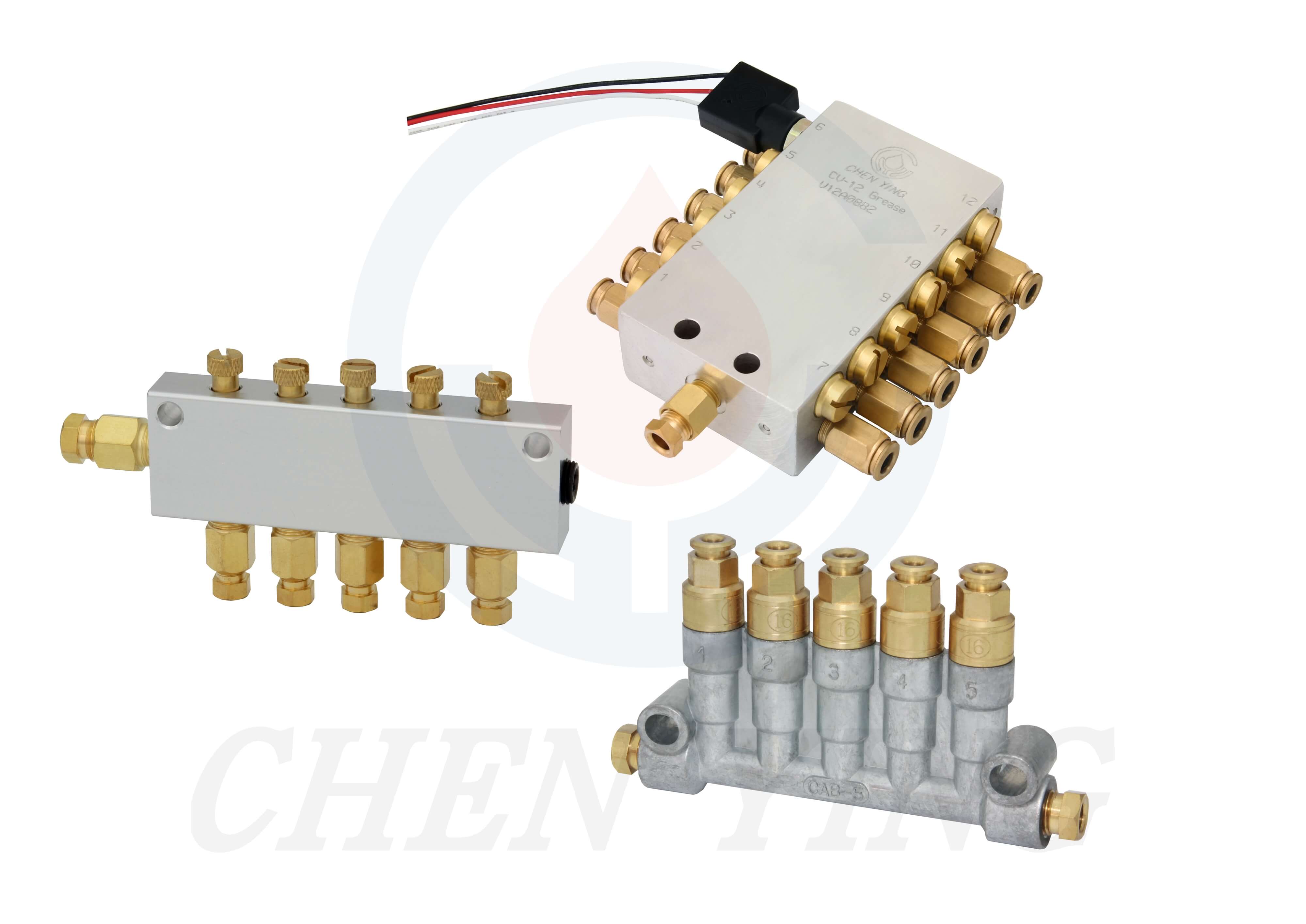 Adjustable Distributor, Progressive Feeder, and Volumetric Distributor
| Selection factor | Resistance system | Volumetric / piston system | Progressive system |
|---|---|---|---|
| Metering method | Flow is apportioned through resistance or metering fittings. | A piston chamber meters a defined volume per completed cycle. | Pistons distribute defined portions sequentially. |
| Outlet operation | Parallel flow; actual delivery depends more strongly on system resistance and lubricant condition. | Outlets operate in parallel; each outlet has its own metering chamber. | Outlets discharge in a fixed sequence. |
| Effect of blockage | A restriction can alter pressure and flow distribution; point-level confirmation is limited. | The affected outlet may fail to deliver while other outlets can continue cycling. | A blocked downstream point normally stops the feeder cycle, supporting centralized fault detection. |
| Monitoring | Usually reservoir, pump, or main-line pressure monitoring. | Pressure monitoring; selected models add indicator pins or sensors. | Cycle indicator or piston detector can monitor feeder operation. |
| Best fit | Simple oil systems with moderate metering requirements and cost priority. | Machines requiring defined, repeatable delivery to multiple points. | Systems needing sequential distribution and centralized cycle monitoring. |
Chen Ying Volumetric Distributor Selection Guide
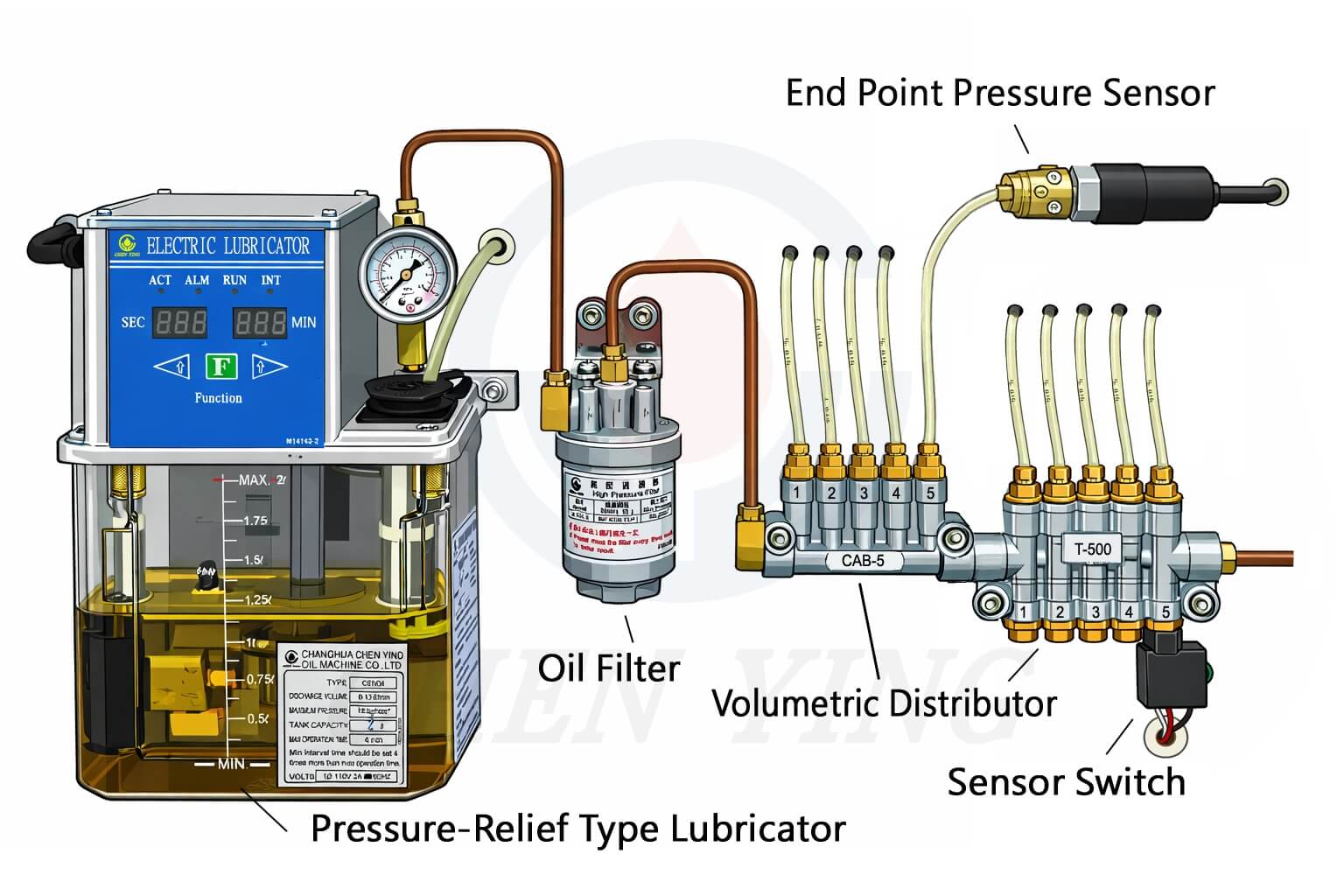 Pressure-Relief Type Lubricator with Volumetric Distributors for Precise Lubrication
Select the distributor only after the required lubricant quantity and operating conditions for each lubrication point have been established. Use the machine-component manufacturer's lubrication data whenever available.
- Identify the lubricant: oil, fluid grease, or oil-air application.
- Determine the required lubricant quantity at each point and the desired lubrication interval.
- Choose the discharge sequence: during pressurization or after pressure relief.
- Check the distributor's output per stroke, operating-pressure range, lubricant range, and reset requirements.
- Calculate total demand per cycle and confirm that the lubricator can build pressure and supply sufficient volume to the entire system.
- Evaluate the most remote point, tubing size and length, back pressure, filtration, ambient temperature, and machine duty cycle.
- Specify visual or electronic monitoring where lubrication failure must generate an alarm or machine interlock.
| Series | Output per stroke | Lubricant | Discharge sequence | Typical selection note |
|---|---|---|---|---|
| T | 0.1 / 0.2 / 0.3 / 0.4 / 0.5 cc | Oil | After pressure relief | Indicator pin at each outlet; optional sensing on applicable configuration |
| CDB | 0.1 / 0.2 / 0.3 / 0.4 / 0.5 cc | Oil | After pressure relief | Visual indication for discharge confirmation |
| CAB | 0.03 / 0.06 / 0.10 / 0.16 cc | Oil | During pressurization | Compact multi-outlet metering |
| CBB | 0.1 / 0.2 / 0.3 / 0.4 / 0.5 cc | Oil | During pressurization | Larger output range than CAB |
| CCB | 1.0 / 1.5 cc | Oil | During pressurization | Large-volume single units can be assembled on a manifold |
| CO / OA | 0.03 / 0.06 / 0.10 / 0.16 cc | Oil-air | During pressurization | Meters oil before mixing with the air stream |
| OC | 0.01 / 0.03 / 0.06 / 0.10 / 0.16 cc | Oil-air | During pressurization | Small metered outputs for precision oil-air applications |
| CFB | 0.03 / 0.06 / 0.10 / 0.16 / 0.2 / 0.3 / 0.4 / 0.5 cc | Grease | During pressurization | Use with a compatible pressure-relief grease lubricator |
Modular Manifolds and System Expansion
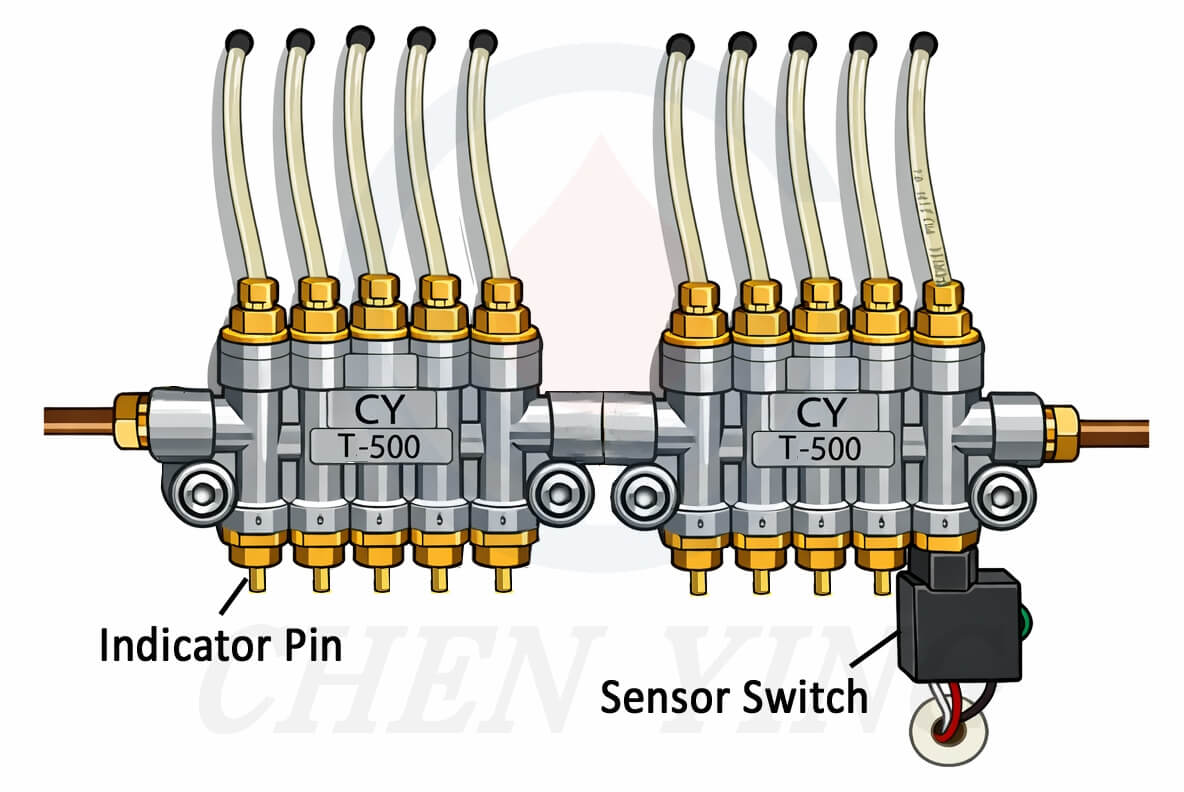 Volumetric Distributor Series Connection for Multi-Point Lubrication
When installation space is limited or lubrication points are distributed across a large machine, multiple distributor sections can be connected in a compact manifold arrangement. Different output volumes may be assigned within the same system when permitted by the selected series. A modular layout can reduce the number of main-line branches, simplify piping, and make future expansion easier. Any expansion must include a new calculation of total cycle volume, pressure buildup time, relief time, and lubricator capacity.
Monitoring and Maintenance
Reservoir-level and main-line pressure monitoring serve as the foundation for system monitoring. Pressure feedback can confirm that the main line reached its target, but pressure alone does not prove that every outlet discharged. For point-level confirmation, select models with visual or electronic feedback, such as CV Progressive Feeders or T-Type and CDB-Type Volumetric Distributors equipped with indicator pins, proximity sensors, or other compatible monitoring devices.
- Keep the reservoir, lubricant, filters, and filling tools clean.
- Inspect tubing and fittings for leakage, crushing, looseness, or air ingress.
- Confirm that system pressure rises and relieves within the specified cycle.
- Check indicator-pin movement or sensor signals where fitted.
- Investigate repeated low-level or low-pressure alarms instead of only resetting the controller.
- Follow the specified maintenance interval and replace damaged or sticking metering components.
Frequently Asked Questions
1. What is a volumetric lubrication system?
It is a centralized lubrication system that uses piston-type metering devices to deliver a predetermined volume of lubricant to each point during a completed lubrication cycle.
2. Is a piston distributor the same as a PDI?
The terms often overlap in industrial use. PDI normally means positive displacement injector or positive displacement injection system. However, internal sequences and pressure requirements differ among product series, so compatibility should be verified from the technical data.
3. How is a volumetric distributor different from a manifold block?
A manifold block primarily provides branches. In a resistance system, fittings or orifices apportion flow. A volumetric distributor contains piston chambers that meter a defined volume per cycle.
4. Why does a PDI or piston lubrication system need pressure relief?
Pressure relief allows the piston to return or the metering chamber to recharge. If residual line pressure remains above the specified reset level, the next cycle may be incomplete.
5. Can a volumetric distributor be used with any lubricator?
No. The lubricator must provide the required pressure, delivery capacity, lubricant compatibility, and pressure-relief function for the selected distributor.
6. Which Chen Ying pressure-relief oil lubricator models are available?
Chen Ying offers CLAB for manual operation; CEN03, CESG03, and CEVB for external PLC control; CEPB, CEWB, CEN04, CESG04, and CENB with built-in timers; and PNB for pneumatic operation.
7. How do I choose between PLC, timer, manual, and pneumatic models?
Choose CEN03, CESG03, or CEVB when the machine PLC manages lubrication cycles; CEPB, CEWB, CEN04, CESG04, or CENB for stand-alone automatic timing; CLAB for simple manual actuation; and PNB where pneumatic actuation is preferred and a suitable compressed-air supply is available.
8. Which Chen Ying pressure-relief grease lubricator models are available?
PLC-controlled models are KGB, KGBP, KAB, KABP, and KGVB; timer-controlled models are KGNB, KGNBP, and KGNVB. KGBP, KABP, and KGNBP use 700 cc grease cartridges, while KGVB and KGNVB are designed for NLGI 000 fluid grease. All models work with CFB Grease Volumetric Distributors.
9. Does pipe length affect the metered output?
A completed piston stroke produces the specified nominal volume, so the output is less dependent on pipe length than resistance-based flow division. However, long or undersized tubing increases pressure loss and filling time and may prevent the most remote distributor from completing its stroke.
10. Do viscosity and temperature affect volumetric lubrication?
Yes, indirectly. The piston chamber defines the nominal volume, but viscosity and temperature affect pressure loss, leakage, response time, filling, and reset behavior. Always remain within the specified lubricant and temperature range.
11. How do I choose the output volume for each lubrication point?
Start with the machine or component manufacturer's lubricant requirement, then consider component size, speed, load, operating time, environment, lubricant type, and lubrication interval. Do not select output only from the number of outlets.
12. How can I monitor whether the system is working?
Reservoir-level and main-line pressure monitoring serve as the foundation for system monitoring. For point-level confirmation, select models with visual or electronic feedback, such as CV Progressive Feeders or T-Type and CDB-Type Volumetric Distributors equipped with indicator pins, proximity sensors, or other compatible monitoring devices.
13. Why is one outlet not delivering lubricant?
Possible causes include trapped air, contamination, a blocked tube or lubrication point, insufficient pressure at the distributor, incomplete pressure relief, unsuitable lubricant viscosity, leakage, or a sticking piston. Check the system from the lubricator toward the most remote outlet.
Conclusion
A volumetric lubrication system provides its greatest value when every lubrication point must receive a known, repeatable quantity. The piston distributor is only one part of that performance. Reliable operation also requires a correctly sized pressure-relief lubricator, suitable lubricant, adequate pressure at the most remote point, sufficient relief time, clean piping, and appropriate monitoring. By engineering these elements as one system, machine builders can improve lubrication consistency, control lubricant consumption, and support long-term machine reliability.
Suggested call to action: Need help selecting a piston distributor or designing a pressure-relief lubrication system? Send Chen Ying your lubricant type, number of lubrication points, required volume per point, cycle interval, tubing layout, and operating conditions for a system recommendation. Contact Us
Internal-Link Recommendations
Volumetric Distributors product category
Pressure-Relief Oil Lubricators - all models
Manual Pressure-Relief Oil Lubricators
PLC-Controlled Pressure-Relief Oil Lubricators
Timer-Controlled Pressure-Relief Oil Lubricators
Pneumatic Pressure-Relief Oil Lubricators
Pressure-Relief Grease Lubricators - all models
PLC-Controlled Pressure-Relief Grease Lubricators
Timer-Controlled Pressure-Relief Grease Lubricators
CFB Grease Volumetric Distributor